

SASSA Biometric Registration Rule Starting April 2026: What Grant Beneficiaries Need to Know
SASSA Biometric Registration Rule Starting April 2026: What Grant Beneficiaries Need to Know
A grandmother in Soweto found out her grant was suspended on a Friday afternoon. She had done nothing wrong. She had collected her Older Persons Grant every month for seven years without missing a single payment. The suspension had one cause: she had not completed SASSA’s biometric registration, and the April 2026 deadline had passed her by completely.
She is not alone. Across South Africa, millions of grant recipients are still unaware that biometric registration is no longer optional. It is now a condition of continued payment.
If you receive any SASSA grant — whether it is the Older Persons Grant, Disability Grant, Child Support Grant, or the SRD R370 — this change affects you directly. And the window to act is narrowing faster than most people realise.
Let me walk you through exactly what this is, why it is happening, and what you need to do before April 2026 closes that window.
What Is SASSA Biometric Registration and Why Is It Happening Now?
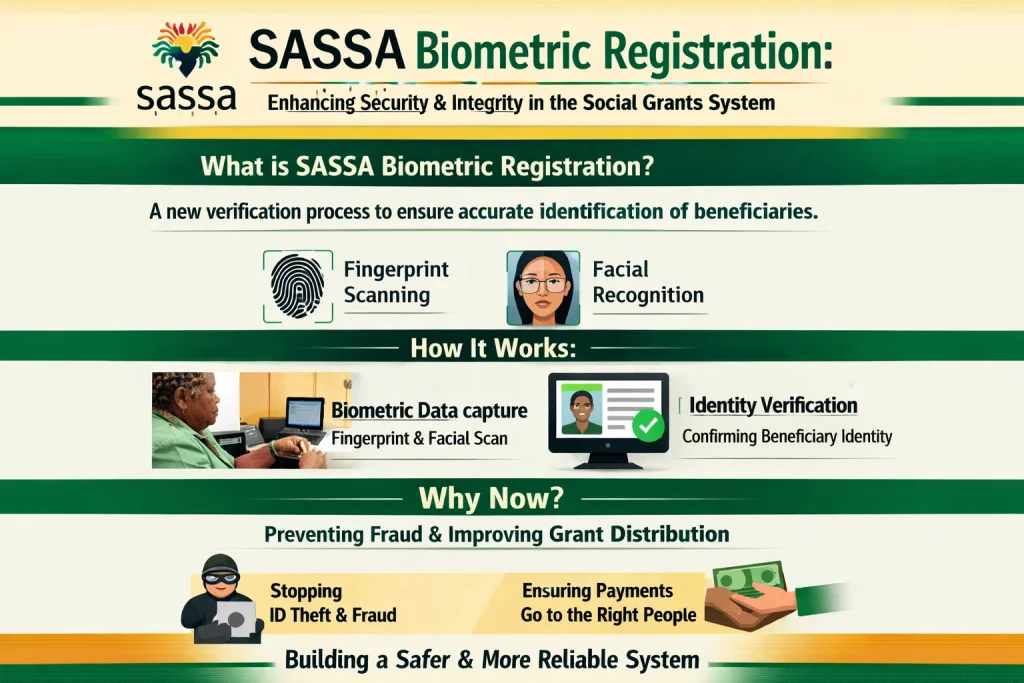
Biometric registration is the process of linking your physical identity — fingerprints and facial recognition data — to your SASSA grant record in the national social grants database. It replaces the old system where a SASSA card and ID document alone were sufficient proof of identity at collection points.
The reason SASSA is enforcing this now comes down to two things: fraud and ghost beneficiaries.
A 2023 Auditor-General report flagged hundreds of millions of rands in grant payments made to deceased individuals, duplicate identities, and fraudulent accounts. The biometric system is designed to make that impossible. When your fingerprint or face is required to access a payment, no one else can collect on your behalf without your physical presence.
That logic is sound. The problem is implementation. Rushing millions of elderly, disabled, and rural beneficiaries through a digital registration process, many of whom have never interacted with a biometric system before, creates enormous practical challenges. And when the deadline hits, the people most likely to miss it are the most vulnerable.
That is why understanding this process now — not in March, not the week before April — matters so much.
Who Needs to Complete Biometric Registration Before April 2026?
Every active SASSA grant recipient needs to register. There are no exemptions based on how long you have been receiving a grant or how consistently you have collected payments.
The groups most urgently affected are:
- Older Persons Grant recipients who collect via SAPO branches or retailers using the SASSA Postbank Gold Card
- Disability Grant recipients, particularly those who have not recently visited a SASSA office for reassessment
- Child Support Grant caregivers who have not updated their banking or identity details in the past two years
- SRD R370 recipients whose accounts were set up before the biometric verification requirement was introduced
If you fall into any of these groups and have not yet registered, the time to act is right now.
Where Do You Go to Complete Your Biometric Registration?
Registration happens at designated SASSA offices and selected Postbank branches. Not every retailer pay point offers this service. This is a critical distinction that causes confusion.
The process requires you to visit in person. You cannot complete biometric registration via the SASSA app, by phone, or through a WhatsApp process. Your physical presence is mandatory because the system needs to capture your fingerprints and a facial scan linked directly to your ID number.
Bring the following when you go:
- Your green barcoded South African ID or Smart ID card
- Your SASSA Postbank Gold Card
- Proof of residence if your address has changed recently
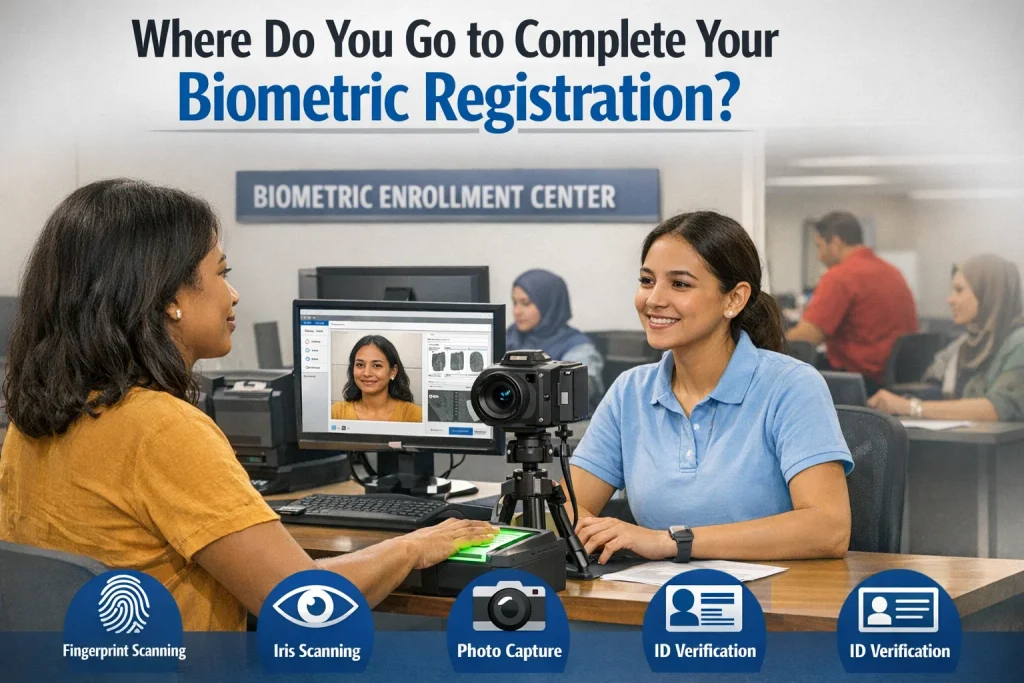
The registration itself takes approximately 10 to 15 minutes once you are attended to. The waiting time at busy offices is the variable. In urban centres like Johannesburg, Durban, and Cape Town, some offices are reporting queues of two to three hours during peak times. Going mid-week and mid-morning consistently produces shorter waits than Mondays or end-of-month dates.
For rural beneficiaries in areas like the Eastern Cape, Limpopo, and KwaZulu-Natal interior, SASSA has indicated that mobile registration units will visit communities before the April deadline. Watch for announcements from your local ward councillor or community radio station about these visits. The SASSA website at sassa.gov.za also publishes mobile unit schedules, though updates can lag by a few weeks.
What Happens If You Miss the April 2026 Biometric Registration Deadline?
This is the question nobody wants to ask, but everyone needs the honest answer to.
If you do not complete biometric registration by the April 2026 deadline, your grant payment will be suspended. Not cancelled permanently — suspended. The distinction matters, but the practical impact in the short term is the same: no payment arrives.
Reinstating a suspended grant after the deadline requires visiting a SASSA office to complete registration and then waiting for the system to process the reinstatement. That process currently takes between two and six weeks, based on reports from beneficiaries who experienced suspensions during the 2025 pilot rollout in Gauteng and the Western Cape.
Two to six weeks without a grant payment is not an inconvenience for most recipients. It is a crisis.
The only way to avoid it is to register before the deadline. There is no shortcut and no workaround.
What If You Cannot Travel Due to Disability or Age?
This is where the system has a genuine gap, and SASSA has faced justified criticism for it.
If a beneficiary is physically unable to travel to a SASSA office due to severe disability, frailty, or hospitalisation, SASSA’s official position is that a home visit can be arranged. In practice, securing a home visit requires submitting a written request to your nearest SASSA office, supported by a medical certificate confirming the inability to travel.
Processing these requests is slow. If you or someone you care for needs a home visit, submit that request immediately. Do not wait until March. The backlog of home visit requests is already growing in several provinces.
Community organisations including the Black Sash, ACVV, and local disability rights groups have been assisting beneficiaries in navigating this process. If you need help submitting a home visit request, contact one of these organisations. They have staff who know the system and can push requests through more effectively than a cold call to a SASSA office.
Is the Biometric System Secure? What Happens to Your Data?
A reasonable concern, and one that deserves a direct answer.
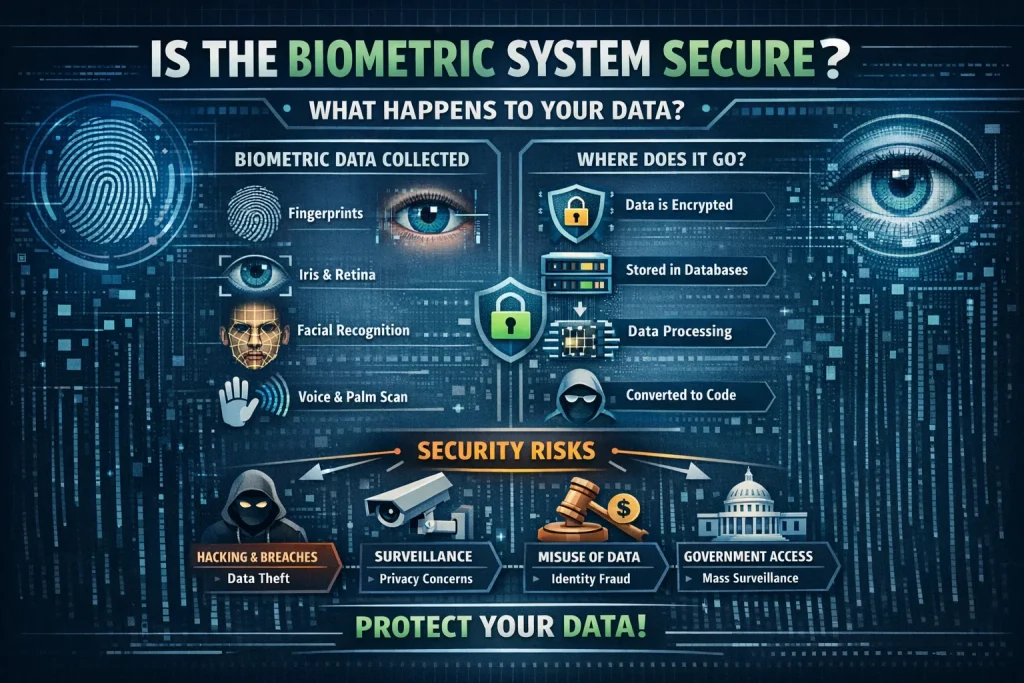
SASSA’s biometric data is stored within the South African Social Security Agency’s secure database, governed by the Protection of Personal Information Act (POPIA). Your biometric data cannot legally be shared with third parties without your consent, and it is not linked to commercial databases.
The security architecture uses the same fingerprint matching systems employed by Home Affairs and the banking sector. It is not flawless — no system is — but it is significantly more secure than the card-based system it replaces.
The bigger practical risk is not data security. It is fingerprint capture quality. Elderly beneficiaries and those who have done manual labour for decades often have worn fingerprints that scanners struggle to read accurately. If your fingerprints do not scan cleanly on the first attempt, SASSA officials are trained to try multiple fingers and adjust scanner sensitivity. Do not accept a failed capture as a final outcome. Ask the official to try again or to escalate to a senior officer.
Frequently Asked Questions About the April 2026 Biometric Rule
Do children receiving the Child Support Grant need biometric registration?
No. The biometric registration applies to the caregiver who collects the grant, not to the child. The caregiver’s identity is what gets linked to the payment record.
I already have a SASSA Postbank Gold Card. Does that mean I am already registered?
Not necessarily. Having a card does not confirm biometric registration. Many cards were issued before the biometric system existed. You need to confirm your registration status at a SASSA office or by calling the toll-free helpline on 0800 60 10 11.
Can someone else register on my behalf?
No. Biometric registration requires your physical presence. The entire point of the system is to link the payment to your unique physical identity.
What if I live in a rural area with no SASSA office nearby?
SASSA’s mobile registration units are scheduled to cover rural and peri-urban areas before April 2026. Monitor announcements from your local municipality and community radio stations. You can also call 0800 60 10 11 to ask when a mobile unit will be in your area.
Will the biometric system affect how I collect my grant monthly?
Eventually, yes. The long-term intention is that biometric verification will replace card-based collection at pay points. In the short term, your card still works as before. The April registration is about linking your identity to the system, not about changing your collection method immediately.
The Honest Truth About What This Deadline Means
South Africa has roughly 18 million active social grant recipients. Getting all of them through a biometric registration process by a fixed deadline is an enormous undertaking. SASSA’s infrastructure has struggled with far simpler tasks than this.
My honest assessment is that the April 2026 deadline will be extended for a portion of recipients, particularly in rural areas where mobile unit coverage is insufficient. But I would not bet your payment on that prediction. The beneficiaries who register before the deadline will face zero disruption. The ones who wait for an extension may face weeks without income if that extension does not come, or comes too late.
Register now. Take the certain path. The uncertain one is not worth the risk when the stakes are your household’s income.
If you found this useful, share it with someone in your community who receives a SASSA grant. Many people will only hear about this requirement when their payment stops. You have the chance to make sure the people you know do not become that story.


