
About the child support grant
To qualify for the child’s primary caregiver role, you must be a parent, grandparent, or even someone over 16 heading a family.
A key note from my experience is that if you are not the parent, you must provide proof such as an affidavit, a police official record, a social worker’s report, a biological parent’s letter, or confirmation from the principal of the school attended.
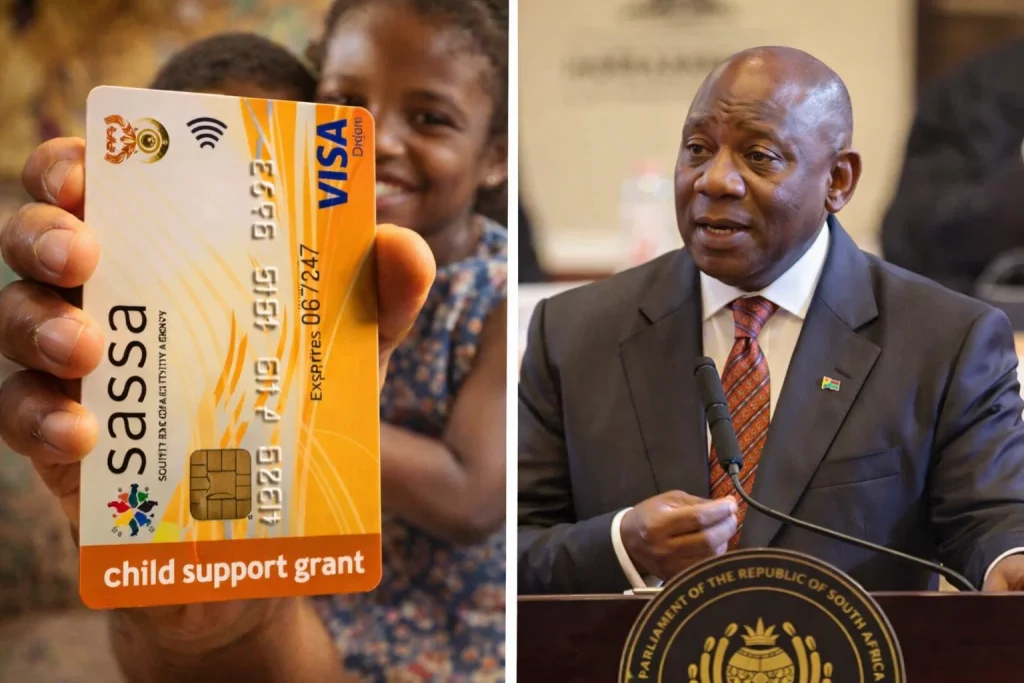
You must also be a South African citizen or permanent resident, and your income cannot earn more than R52 800 per year if single, or go above R105 600 if married with combined income.
Basic Conditions the Child Must Meet
The child must be under the age of 18 years, not cared in a state institution, and must live with a caregiver who is not paid to look after them.
Both you and the child must live in Africa, and another important rule is that you get the grant for no more than six children who are not legally adopted.
How Much You Get Each Month
The amount is R560 per month, with a top-up plus R280 in certain cases. In real life, I’ve seen how this steady help can support a needy family to raise a child they care for.

How the Grant Is Paid
The Social Security Agency (SASSA) will pay the grant through different methods, including cash at a specific point on a particular day, or electronic deposit into a bank or Postbank account.
A bank may charge a service fee, or an institution acting as administrator can assist. If unable to collect money yourself, you can appoint a procurator at the office, or give someone power of attorney to receive it on your behalf.
Reviews, Possible Suspension, and Care Changes
SASSA may decide the grant should be reviewed, based on income declared when you apply, forming the basis of the decision.
You are notified three months in advance before the date of the review, and a life certificate is required as proof you are still alive.
A suspension may happen if there is a change in circumstances, the outcome of a review, you fail to co-operate, commit fraud, misrepresent, if a mistake was approved, or if the child is no longer in your care.
When the Grant May Lapse
The grant passes away when the child is admitted to a state institution, the caregiver doesn’t claim it for consecutive months, the child is absent from the country, or at the end of the period when the child turns 18.
What You Should Do to Apply
You must go to the nearest office where you bring your 13 digit-bar-coded identity document (ID) and birth certificate.
If you don’t have these, complete an application form in standard format in the presence of a Commissioner of Oaths, with a sworn statement from a reputable person like a councillor, traditional leader, minister of religion, or someone who knows the applicant.
You may need documents from the Department of Home Affairs, a temporary issued ID, baptismal certificate, road health clinic card, earnings, marriage or divorced court order confirming custody, and if parents are dead or missing, a death person’s record. Keep the receipt after you apply.
If the Application Is Not Approved, Processing, and Contact
If Not Approved, SASSA will inform you in writing why it was unsuccessful, and if you disagree, you can appeal to the Minister of Development at national level within 90 days after being informed. Processing can take up to three months, and once paid, the service is free.
Forms are available online or at offices; for help, contact SASSA, call Toll free 0800 60 10 11, or send an Email to [email protected] regarding the Child Support primary care giver, including refugee permanently residing, who must ensure they reside, provide smart card or alternative identification in absence, meeting requirements of the Means Test, ensuring school going children attend, produce attendance, and understand failure does not mean refusal.