
SASSA Foster Child Grant: The Complete Guide Nobody Bothered to Write Honestly
Let me tell you something that frustrated me deeply when researching this topic.
Most articles about the SASSA Foster Child Grant read like photocopies of government pamphlets. Dry. Clinical. Useless when you are standing at a SASSA office at 7am, confused, exhausted, and responsible for a child who needed help yesterday.
This guide is different. I am going to walk you through everything, including the parts that trip people up, the timelines nobody warns you about, and the honest reality of how this system works in 2025.
Whether you are a foster parent just starting out, a social worker helping a family, or a grandparent raising a grandchild who needs to understand what is available, this is for you.
What Exactly Is the SASSA Foster Child Grant?
The SASSA Foster Child Grant is a monthly cash payment made by the South African Social Security Agency to adults who are legally registered foster parents caring for a child in need. It exists because South Africa recognizes that raising someone else’s child comes with real financial responsibility.
As of 2025, the grant amount is R1,130 per month per foster child. That figure increases slightly each year, usually announced in the February Budget Speech. It is not a fortune. Anyone who tells you it covers everything is not being straight with you. But it makes a meaningful difference, especially in households already stretched thin.
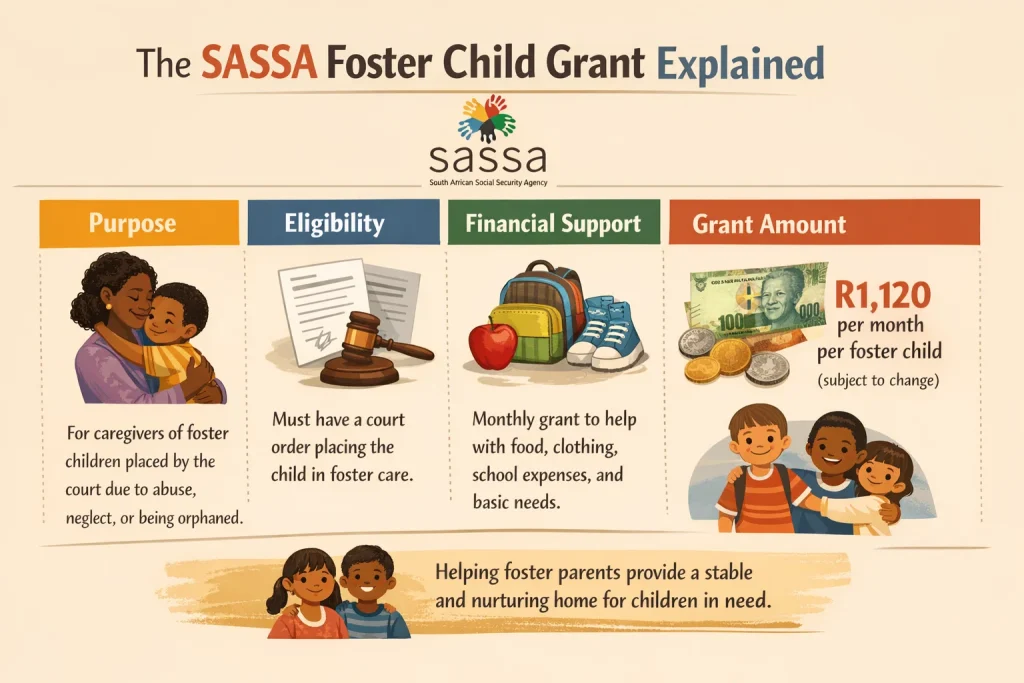
What separates this grant from others like the Child Support Grant is the legal foundation behind it. You cannot simply apply because you are caring for a child informally. The court must have issued a foster care order in your name. That one requirement changes everything about the process, the timeline, and the documentation involved.
Who Qualifies for the Foster Child Grant?
Here is where many people hit their first wall.
The qualifying criteria sound simple on paper. The applicant must be a South African citizen or permanent resident. The child must be under 18. The applicant must be the legally appointed foster parent through a Children’s Court order. The household income must fall below a certain threshold.
But the income threshold is where confusion creeps in. SASSA applies a means test. In 2025, the applicant and their spouse combined may not earn more than R54,000 per year from all sources. That works out to R4,500 per month. Many working-class foster parents narrowly miss this threshold, which is genuinely painful to witness.
There is also the question of citizenship. Refugees with Section 24 permits are eligible, which surprises many people. Asylum seekers with Section 22 permits are not. This distinction matters enormously in communities with significant migrant populations.
One honest observation from helping families navigate this: the system rewards persistence and documentation far more than genuine need. A family in desperate circumstances but missing a single form will wait months longer than a well-prepared family with moderate resources and good filing habits. That is not fair. But it is real.
The Children’s Court Order Requirement: Understanding the Timeline
This is the part most guides skip over or understate.
Before you can even submit a SASSA application, you need a foster care order from the Children’s Court. This requires a social worker assessment first. The Department of Social Development assigns a social worker who visits the home, assesses the child’s circumstances, and submits a report recommending foster placement.
Here is the honest timeline based on real experiences. The social worker assessment alone can take six to twelve weeks in urban areas. In rural provinces like Limpopo or the Eastern Cape, delays of four to six months are common. After the report, the court date scheduling adds another four to eight weeks. Only after the court order is granted can you approach SASSA.
In practice, many foster parents are already caring for a child for six months or longer before they receive their first grant payment. This gap is where families struggle most. Knowing this upfront lets you plan rather than be blindsided.
If the process feels stuck, contacting the clerk of the Children’s Court directly and asking for an expedited hearing on grounds of financial hardship is a legitimate option. Social workers can also motivate for urgency in their reports. It does not always work, but it sometimes shortens the wait.
Documents You Need for the SASSA Application
Gather these before you step into any office. Missing a single item can mean returning weeks later.
You will need your green barcoded ID or smart ID card. You will need the child’s birth certificate. You will need the foster care order from the Children’s Court, certified within three months. You will need proof of residence no older than three months, such as a municipal bill or affidavit. If you are married, your spouse’s ID and proof of income are required. If you receive any other income, bank statements or payslips covering three months are needed.
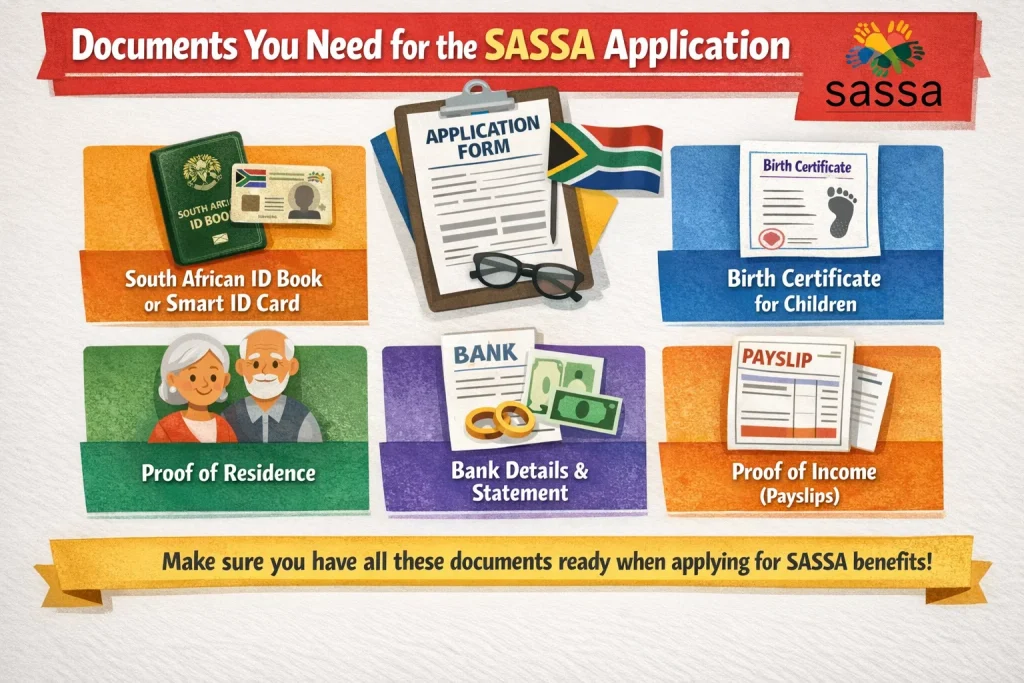
Some SASSA offices also ask for a school enrollment certificate for the child, though this is not officially listed as a requirement. Bring it anyway. It prevents unnecessary delays.
Certified copies are non-negotiable. SASSA will not accept uncertified documents. You can certify at any police station, post office, or commissioner of oaths. Do five copies of everything. It sounds excessive until you have to return for a second visit because one copy disappeared into an administrative process.
How to Apply: The Actual Process Step by Step
Step one is visiting your nearest SASSA office in person. Online applications for the Foster Child Grant are not available as of early 2025. You need to be there physically.
Arrive early. Not at opening time. Earlier. SASSA offices in townships and smaller towns regularly have queues that start forming before 6am. People who arrive at 9am often do not get served that day and must return. This is a documented reality, not an exaggeration.
Take a number. Wait. When called, submit your complete document package and ask for a receipt or reference number. Keep this reference number with the same energy you would protect a bank card PIN.
SASSA has 90 days legally to process and communicate a decision. In practice, most straightforward applications resolve within 60 days. Complex cases, or those requiring additional verification, can push past the 90-day mark.
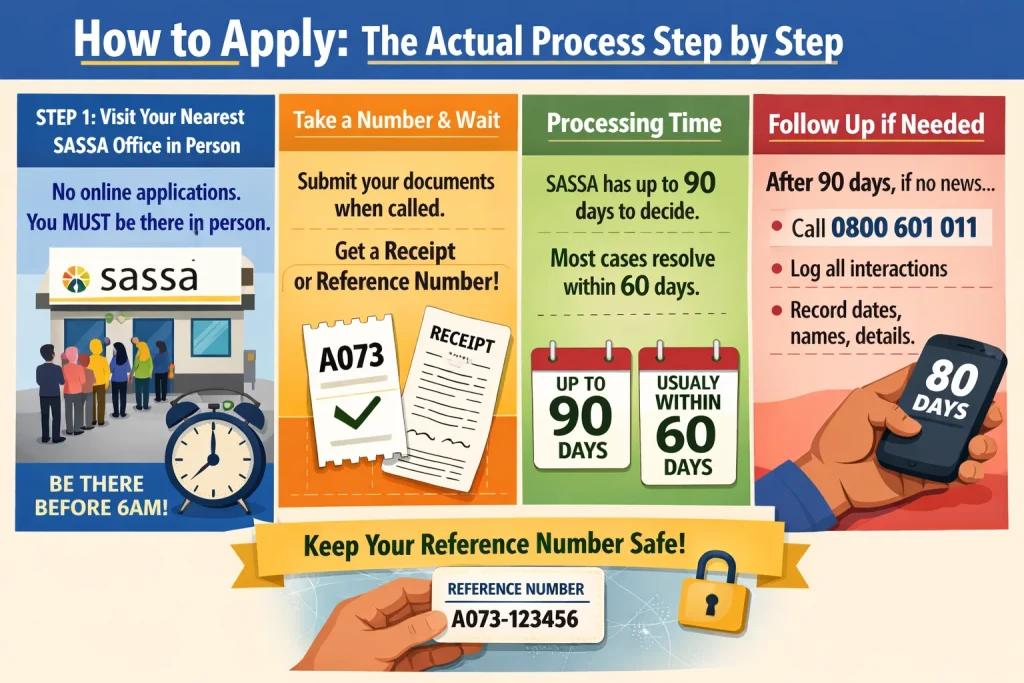
If you have not heard anything after 90 days, that reference number becomes your tool. You can visit the office or call the SASSA helpline at 0800 601 011 to follow up. Log every interaction, including dates, names of staff, and what was said.
Payment Methods: How You Actually Receive the Money
SASSA offers several payment options. The SASSA gold card, which works at retailers like Shoprite, Pick n Pay, and Boxer, as well as at ATMs, is the most common. It can be linked to a bank account if you prefer direct deposits.
Post offices remain an option in areas without easy ATM access, though the South African Post Office’s ongoing instability has made many beneficiaries nervous about relying on this channel. If you live near a functional post office, it still works. But having a bank account option as a backup is wise.
Cash payments at pay points in rural areas still exist for communities with very limited banking access. These are scheduled on specific dates and locations, which SASSA communicates through local community structures and occasionally through SMS.
What Happens When the Foster Care Order Expires?
Here is something that genuinely catches families off guard.
Foster care orders are typically issued for two years. When the order expires, so does the grant, unless you renew the court order. This means you must return to the Children’s Court before the order lapses and apply for a renewal.
The renewal process goes through the same social worker assessment channel. Starting the renewal process at least four months before expiry is not overcautious. It is necessary. Families who leave it too late find themselves in a gap period with no grant payment, even though they never stopped caring for the child.
SASSA will suspend payment when the court order expires. They will not automatically remind you. The responsibility is entirely yours to track the expiry date and initiate renewal in time.
Mark the expiry date in every calendar you own the day you receive the original order.
Appeals and Rejected Applications
SASSA rejections feel devastating, especially when you know the need is real.
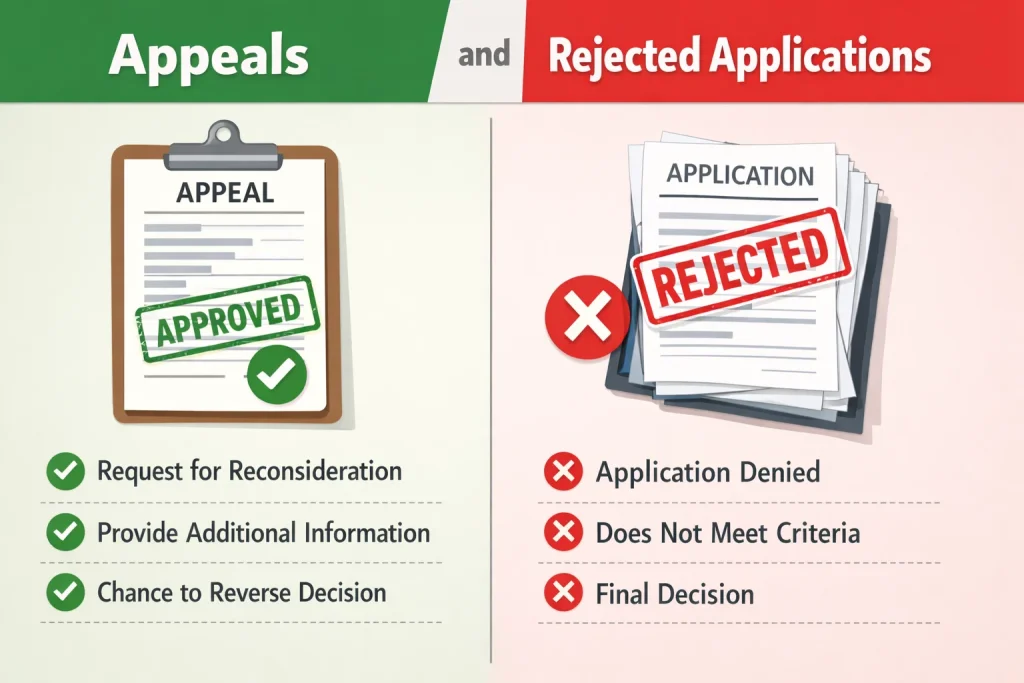
The most common rejection reasons are: income exceeding the means test threshold, documentation issues, and the child not meeting the qualifying definition. Occasionally, data capturing errors at the office level cause rejections that have nothing to do with genuine ineligibility.
You have 90 days from receiving a rejection notice to appeal. Submit the appeal to the SASSA office that rejected you, in writing. If the appeal is denied internally, you can escalate to the Independent Tribunal for Social Assistance Appeals, known as ITSAA. This body operates independently and has overturned many SASSA decisions.
Black Sash, a South African human rights organization with over sixty years of history, provides free assistance for SASSA appeals and has helped thousands of beneficiaries navigate this exact process. Their helpline and advice offices are an underused resource that I would recommend without hesitation.
Frequently Asked Questions
Can I receive the Foster Child Grant for more than one child?
Yes. Each child with a valid foster care order in your name qualifies separately. If you are fostering three children, you can receive three separate grant payments totaling R3,390 per month as of 2025 rates.
What is the difference between the Foster Child Grant and the Child Support Grant?
The Child Support Grant is available to biological parents or primary caregivers without a court order and pays R530 per month per child. The Foster Child Grant requires a court order but pays R1,130 per month. You cannot receive both for the same child simultaneously.
Can grandparents apply for the Foster Child Grant?
Yes, if a Children’s Court has issued a formal foster care order placing the grandchild in their care. Many grandparents raising orphaned grandchildren qualify. The key is the court order. Informal arrangements, even long-standing ones, do not qualify without it.
What happens to the grant if the foster child turns 18?
The grant stops. However, if the child is enrolled in school, an extension to age 21 may be possible under certain conditions. You must apply proactively before the child’s 18th birthday.
Does the foster parent’s income affect the grant amount?
The income means test determines eligibility, not the grant amount. If you qualify, you receive the full R1,130 regardless of whether your income is R0 or R4,499 per month.
Can the grant be paid directly into the child’s account?
No. The grant is paid to the foster parent as the responsible adult, not to the child.
What if the biological parents object to the foster placement?
This is a Children’s Court matter, not a SASSA matter. SASSA processes grants based on the court order. Disputes about the foster placement itself must be resolved at court level.
The Emotional Reality Nobody Discusses
Applying for this grant is often emotionally complicated in ways the system does not acknowledge.
Many foster parents carry guilt about accepting money for caring for a child they love. Some biological relatives feel shame about needing state assistance. Social workers have told me directly that some families delay applications for months because of this, missing out on thousands of rands in the process.
Let me say this clearly. Accepting the Foster Child Grant is not charity. It is a child’s right under South African law. The Children’s Act exists precisely because society has a collective responsibility for vulnerable children. Using available resources is not weakness. It is practical love in action.
The children in foster care in South Africa have often already experienced loss, instability, or trauma. The adults caring for them deserve every available resource. Use it.
Final Thoughts
The SASSA Foster Child Grant is not a perfect system. The delays are real. The documentation demands are heavy. The income threshold arguably excludes some families who genuinely need support. And the connection between Children’s Court processes and SASSA administration creates coordination gaps that cause unnecessary suffering.
But for families who navigate it successfully, it provides meaningful monthly support that keeps children clothed, fed, and in school.
Start the Children’s Court process earlier than you think you need to. Document everything obsessively. Use free resources like Black Sash if the process becomes overwhelming. And know your appeal rights if things go wrong.
If you are in the middle of this process right now and feel stuck, what specific part has been most difficult? Your question might help someone else reading this face the same challenge.