

SASSA Issues 30-Day Notice for Grant Beneficiaries to Visit Offices for Review
Imagine waking up one morning to find your social grant payment missing. No warning text. No letter you remember reading. Just silence from your bank account — and a child waiting to be fed.
This is the reality thousands of South African grant beneficiaries face every month. Not because SASSA acted unfairly. But because a 30-day notice arrived, sat unopened or unread, and quietly expired.
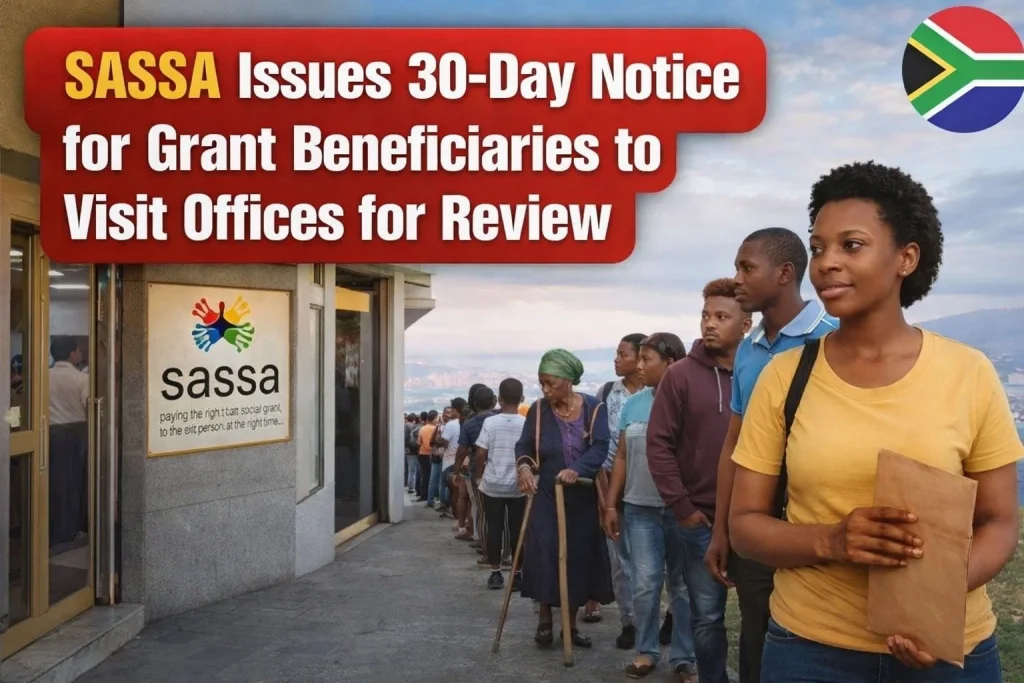
Right now, the South African Social Security Agency is actively urging beneficiaries across the country to respond to 30-day notices requiring them to visit SASSA offices for a social grant review. This is not a scam. This is not optional. And if you are one of the more than 28 million South Africans who depend on a social grant, this article could protect your payment.
Here is everything you need to understand — clearly, honestly, and without the government jargon that causes so much confusion.
What Is the SASSA 30-Day Notice and Why Are People Getting It?
The 30-day notice is a formal communication from SASSA telling a beneficiary that their grant is due for review. You might receive it via SMS, letter, or a note on your payment slip. Once that notice lands, you have 30 days to visit your nearest SASSA office — or risk having your grant suspended or lapsed.
The review process exists because SASSA is legally required to confirm that grants go only to people who still qualify. Think about it this way: a disability grant recipient may have recovered. An older person’s grant may still be going to someone who passed away months ago. A child support grant beneficiary may now earn an income that disqualifies them. The system needs to catch these changes — and the 30-day review is how it does that.
In Mpumalanga alone, recent third-quarter figures show that 12,151 beneficiaries were notified to visit SASSA offices. Of those, only 2,303 completed the review. A further 221 grants lapsed entirely because people did not respond. That means real families lost real income — not because they were fraudsters, but because they did not act in time.
What Happens If You Ignore the Notice?
Here is the part most people do not fully grasp until it is too late.
Ignoring the 30-day notice does not make the issue go away. Under Sub-regulation 32(2) of the Social Assistance regulations, SASSA must formally notify beneficiaries before suspending or cancelling any grant. The agency sends that notice. Once 30 days pass without a response, your grant can lapse. That means payment stops — and restarting the process takes considerably longer than simply responding in the first place.
SASSA CEO Themba Matlou has been clear that grants are not automatically cancelled overnight. During the review process, payments may be delayed temporarily until the review is complete. But delay is very different from a grant that has fully lapsed. Recovering a lapsed grant involves reapplication, fresh documentation, and waiting periods that can stretch for weeks.
The honest truth? Most people who lose their grants through this process are not fraudsters. They are people who missed an SMS, did not understand the letter, or assumed the notice did not apply to them. Do not let that be your story.
What Documents Must You Bring to the SASSA Review?
Walking into a SASSA office without the right papers means a wasted trip. Here is exactly what SASSA requires beneficiaries to bring:
- Your valid South African ID — either the green barcoded ID book or a smart ID card
- Proof of income, such as payslips, a pension slip, or an affidavit if you are currently unemployed
- Bank statements covering the last three months for all active accounts
- Proof of residence — a utility bill, a lease agreement, or a letter from a local authority
- A medical referral report if your grant is a disability or care dependency grant
- A marriage certificate or divorce decree if applicable
- A death certificate if a relevant family member has passed away
Bring originals and photocopies where possible. SASSA officers need to verify documents, and having copies ready speeds up the process significantly.
Can Someone Else Go to SASSA on Your Behalf?
Yes — and this is an option many elderly or disabled beneficiaries are not aware of.
If you are physically unable to visit a SASSA office yourself, you are permitted to appoint a procurator. A procurator is a person authorised to act on your behalf for the purposes of the grant review. The procurator must bring the necessary documentation and follow the prescribed procedures. This option exists precisely because SASSA recognises that many grant recipients are elderly, disabled, or live far from the nearest office.
If you are considering this route, contact SASSA’s toll-free number — 0800 60 10 11, available Monday to Friday during working hours — before sending someone on your behalf. Confirm what documentation your procurator will need to carry.
Why Is SASSA Doing This Now? The Bigger Picture
The 2025/26 budget allocation to SASSA was made conditional on the agency improving its verification processes and conducting more frequent eligibility reviews. National Treasury’s directive was direct: clean up the grants system, reduce fraud, and ensure public funds reach people who genuinely qualify.
By December 2025, SASSA had already reviewed the bank accounts of approximately six million clients and eight million credit bureau records. Those checks flagged over 291,000 beneficiaries for review. Grant amounts were adjusted for nearly 9,000 disability and old-age recipients. A further 34,661 grants were cancelled outright — representing projected savings of over R170 million by end of the 2025/26 financial year.
This is not a witch-hunt against poor people. It is a government agency under real pressure to justify billions of rands in public spending. If your grant is legitimate, the review is an inconvenience — not a threat.
What Comes Next: SASSA’s Plans to Reduce Office Queues
One of the more encouraging developments buried inside SASSA’s official communications is this: the agency is actively working to introduce self-service online options for grant reviews. The goal is to reduce the pressure on physical offices and cut travel costs for beneficiaries who live far from service centres.
No firm launch date has been confirmed as of March 2026, but work is underway to capacitate local offices to handle current volumes while digital alternatives are developed. When online review options do arrive, they will be a significant improvement — especially for rural beneficiaries who currently face long journeys and even longer queues.
Until then, the only compliant path forward is an in-person visit to your nearest SASSA office.
Final Word: Act Now, Not Later
The 30-day clock starts from the moment SASSA sends that notice — not from when you read it, not from when you decide to take it seriously. Thirty days disappear faster than most people expect.
If you have received a review notice, book time this week to visit your nearest SASSA local office. Bring all your documents. If you cannot go yourself, arrange a procurator and call 0800 60 10 11 for guidance first.
Your grant is worth protecting. The review process exists to protect it — and you.

